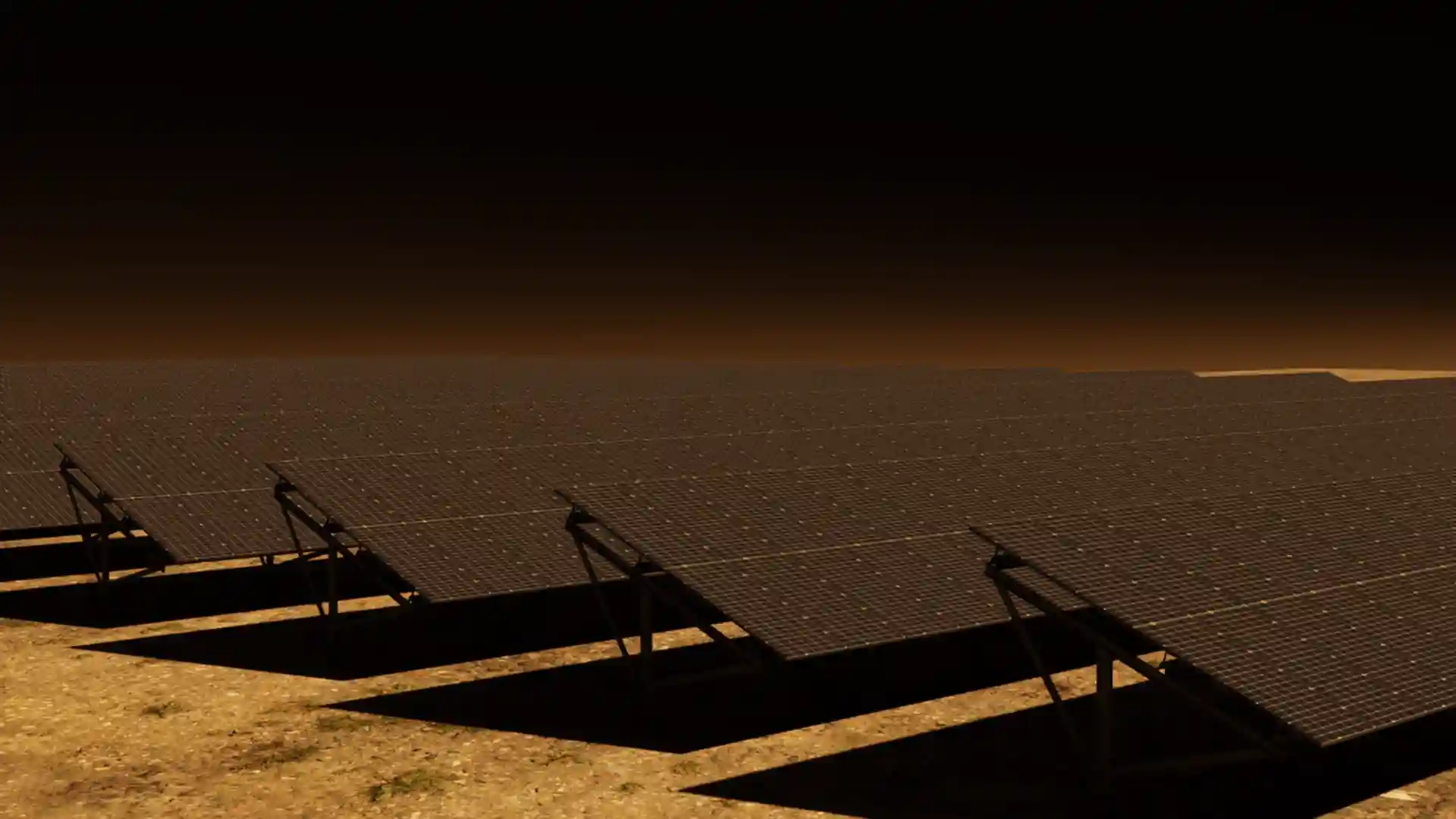
"At the stroke of the midnight hour, when the world sleeps, India will awake to life and freedom."
Jawaharlal Nehru, Constituent Assembly, night of 14–15 August 1947
India won its independence in 1947. It has not yet won its energy independence. We still import most of what we burn. The one source we do not import is the one falling on us for free, and we are now building solar faster than we have built anything else on the grid.
But building a plant and running one are different problems. Most of what gets built underperforms quietly, for years, and nobody notices.
Fluxbase launches today.
4 months
On a plant we operate, 2 inverters stopped reporting on 12 April. The cause was a loose termination on a communication line: a few minutes of work, once someone knew where to stand.
They were found 4 months later.
The monitoring system had recorded the outage correctly, every 5 minutes, the entire time. It raised no alarm because nothing was configured to ask whether an inverter that had gone quiet was supposed to be quiet. The data was complete. The data was also unread, because reading it would have meant one person examining several thousand data streams every morning and remembering what each of them looked like in a normal August.
The monitoring worked perfectly. That is the problem.
What you probably think we are
Another AI layer for solar monitoring. Something that sits on top of plant data and returns a better-looking chart.
Fair guess. Wrong.
Monitoring reports what happened. Every plant already has monitoring, and plants still lose months. Adding a more attractive screen to a problem that nobody has time to look at produces a more attractive screen.
What we are
A research company that operates power plants. Neither half is decoration.
We build the intelligence that runs solar. We also run solar: real assets, real revenue, real consequences when we get it wrong, because the alternative is asking an owner to hand over their plant on the strength of a demonstration.
That order is the whole method. Operate first. Earn the product second.
The obvious objection: owners have heard AI will fix your plant before, usually from people who have never stood in one at 44 degrees trying to work out why a string is down. We think that scepticism is correct and well-earned. It is why we are not asking to be believed. We are asking to be measured.
What we believe
01Solar plants will run themselves.
Not reporting. Operating: deciding what is wrong, what it is costing, and what to do about it, without waiting for a person to notice. Every other part of a plant has been engineered and driven down in cost: panels, inverters, trackers, the data layer underneath. The part that decides was never built. Build it and O&M stops being a staffing problem and becomes a solved one. We expect this to read as obvious within 10 years and contentious today. We are dating this document so there is a record of which side we took.
Solar goes first.
Older generation was a few enormous machines in a few places, each important enough to justify a room full of engineers. Solar is the opposite: thousands of small assets, scattered across geographies, individually too minor to staff and collectively too large to ignore. That shape is unmanageable by attention and entirely tractable by software. Whatever gets solved here transfers to wind, to storage, to everything distributed that comes after.
Every plant needs real operations. Almost none get it.
Not because owners are negligent. Because a plant has thousands of strings and a person has one pair of eyes and a morning. Those two quantities do not meet, and no amount of diligence makes them meet. The failures that result are not dramatic; they are small, silent, and continuous, which is exactly why they survive so long.
What we are building
Plants produce an enormous quantity of data and almost no answers. We are building what belongs in between:
- Models that learn how one specific plant behaves, rather than how plants behave on average: a plant is shaped by its own soiling, its own shading, its own history of repairs
- A continuously maintained expectation of what each plant should be producing right now, so that the gap against what it actually produced becomes visible, attributable, and priced
- Answers an owner can get directly from their own asset, without commissioning a study or waiting for the quarterly review
- In time, a standard for what good operation means, because an industry that cannot agree on what good looks like cannot tell when it is not getting it
Why we are building it
A solar plant is a 30-year asset financed on a model that assumed it would run properly. Every percent it underperforms comes out of somebody's return, and then out of the case for building the next one. Underperformance is not only lost generation. It is a slower energy transition, priced in by every lender who has seen the actual numbers against the projected ones.
So the argument is not that solar is good. Everyone agrees solar is good. The argument is that the distance between what solar promised on paper and what it delivers in the field is where the next decade of energy is actually decided, and that closing it is an engineering problem nobody has taken seriously enough.
We are taking it seriously.
The first independence was won at midnight. This one gets won at noon, one plant at a time.
If you own plants, run them, or want to build the intelligence that will: reach us at fluxbase.energy.
Thank you for reading through.